
The door closer was first invented about 100 years ago before there were any standards about door size and thickness. In the northern states the doors of dormitories, factories and schools would be propped open during the summer. On a breezy day it was common for a heavy door to slam shut without notice, causing harm to anyone standing in the doorway. The door closer was first invented as a device to slow down the door before it could slam shut on someone’s arm or leg or worse. Not long after, the door closer was re-invented to control the closing and opening speeds of doors used in public places. In short, the door closer is intended for life-safety. First to control the opening and closing speeds of the door, and second to insure a Fire Door in any building stairwell will self-close and self-latch. Thus cutting off a draft which could help fuel and spread a fire.

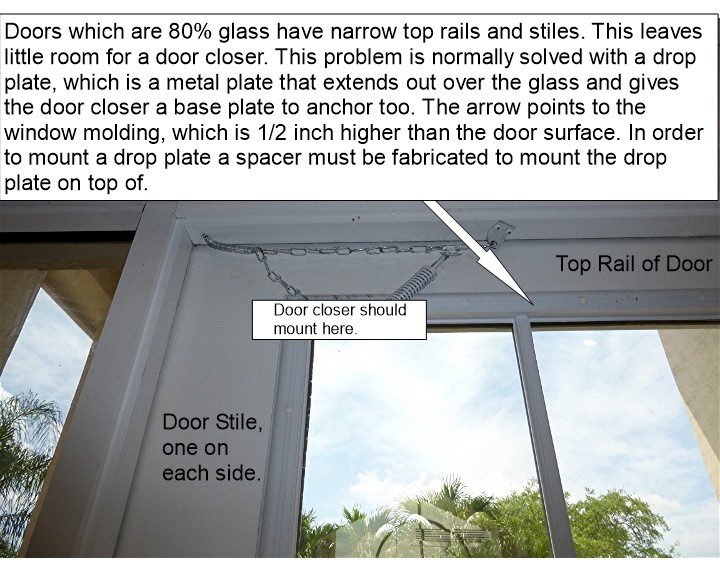
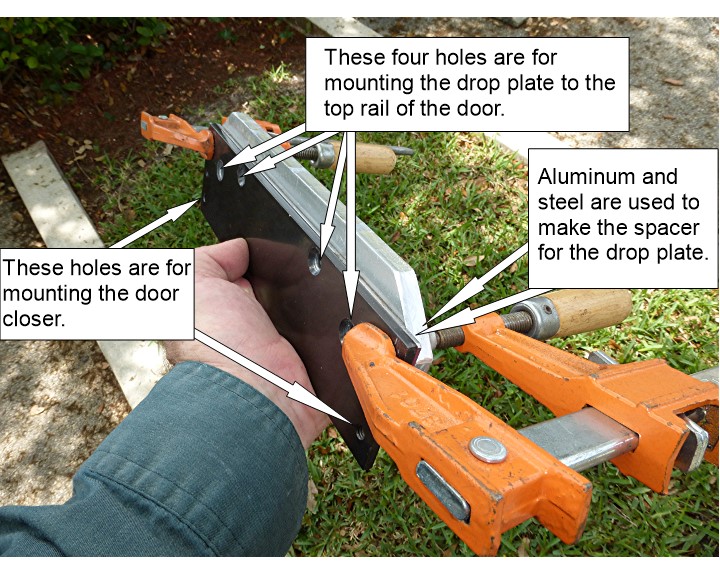
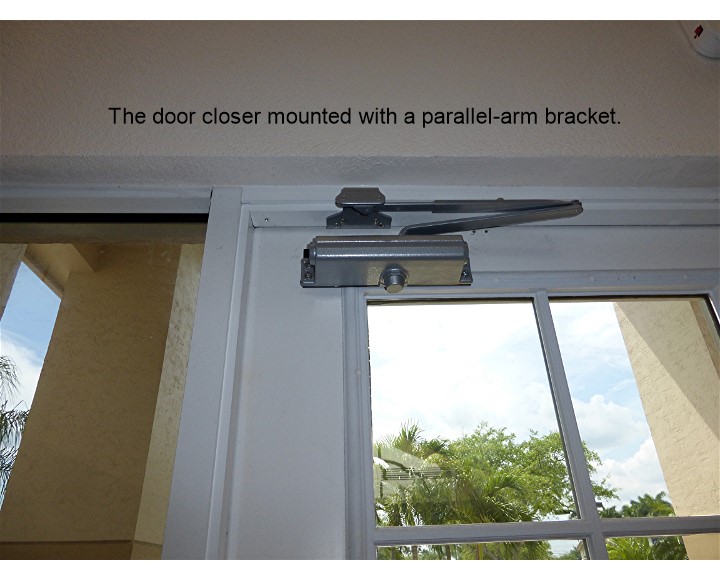
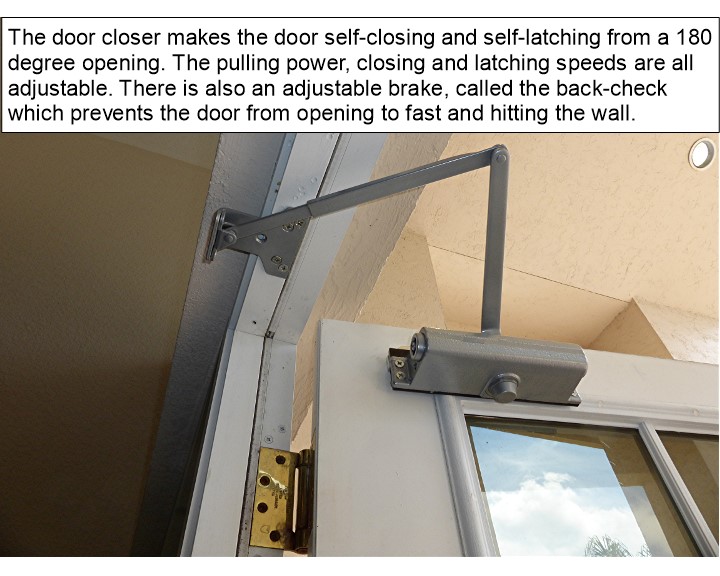
The door closer in this blog was installed at the request of a receptionist who became tired of patrons slamming the door shut, or leaving the door open and letting all the air-conditioning escape. The problem to overcome was the molding around the glass. On normal store front type doors which are 80% glass a drop-plate is used for mounting the door closer. On this particular door I had to fabricate a spacer to compensate for the molding around the glass. The molding was about ½ inch higher than the door surface.
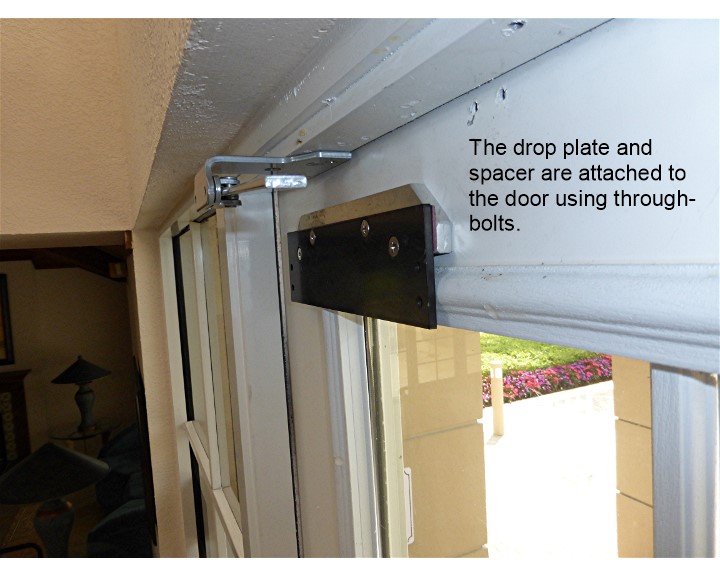
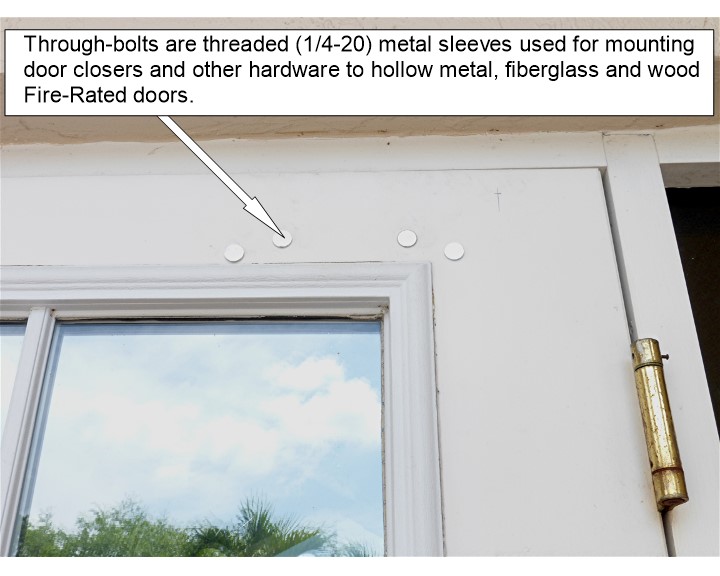
After taking some measurements the spacers were clamped to the drop-plate and holes were drilled through the spacers. Then the whole assembly was fastened to the door using through bolts. Through bolts are threaded metal sleeves which are pressed through a hollow door from the outside. The hardware is held to the door on the inside using machine screws which thread into the through bolts.
Many hotels use spring hinges to insure the room doors close and latch to contain a possible fire. Spring hinges meet code and are much less expensive than a door closer.